TL;DR: Buffered recording lets your dash cam capture what happens before and after a crash, without you pressing a thing. It runs quietly in the background, constantly looping and ready to save critical moments that can protect you from false claims, disputes, or surprises on the road.
Key Takeaways:
- Buffered recording saves footage before and after sudden impacts.
- G-sensors detect motion and trigger automatic video saving.
- Parking mode protects your car even when you’re not around.
- Not all dash cams offer full-featured buffered recording; quality matters.
What is Buffered Recording and Why It Matters
Buffered recording is one of those built-in features that most drivers don’t think about; until something goes wrong.
It’s running quietly in the background, constantly looping and ready to save footage, even before you hit the brakes.
That means your dash cam isn’t just recording what happens during a crash; it’s been capturing what happened in the seconds before, too.
Those few moments can be just as critical, especially when it comes to showing who was really at fault.
Your Dash Cam’s Sixth Sense: How It Anticipates Trouble
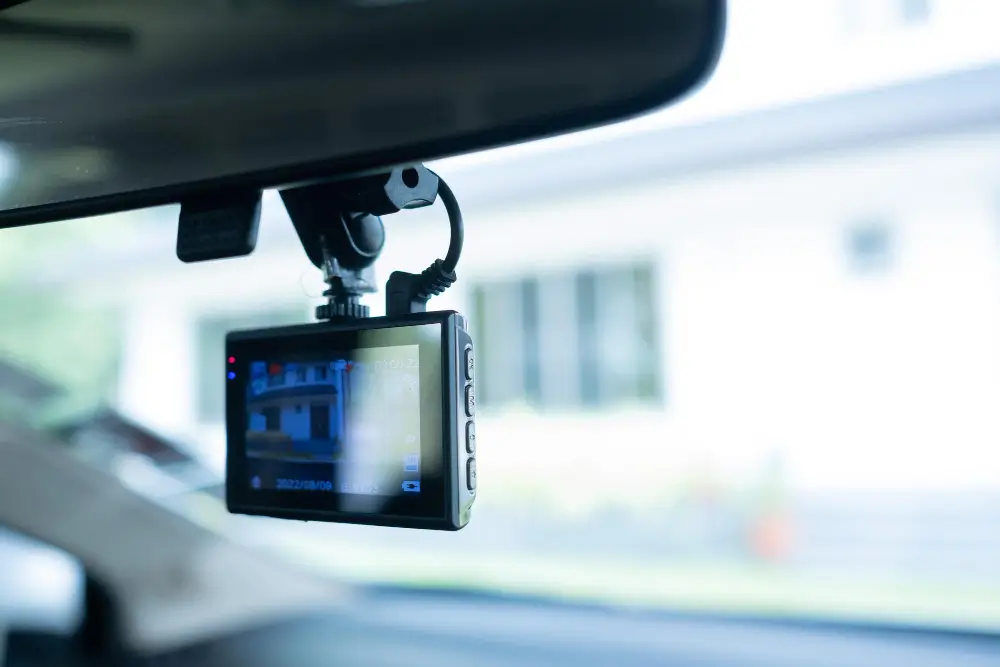
It might sound like something out of a spy movie, but your dash cam actually has a way of sensing a crash before it happens.
Here’s how it works, broken down into simple points:
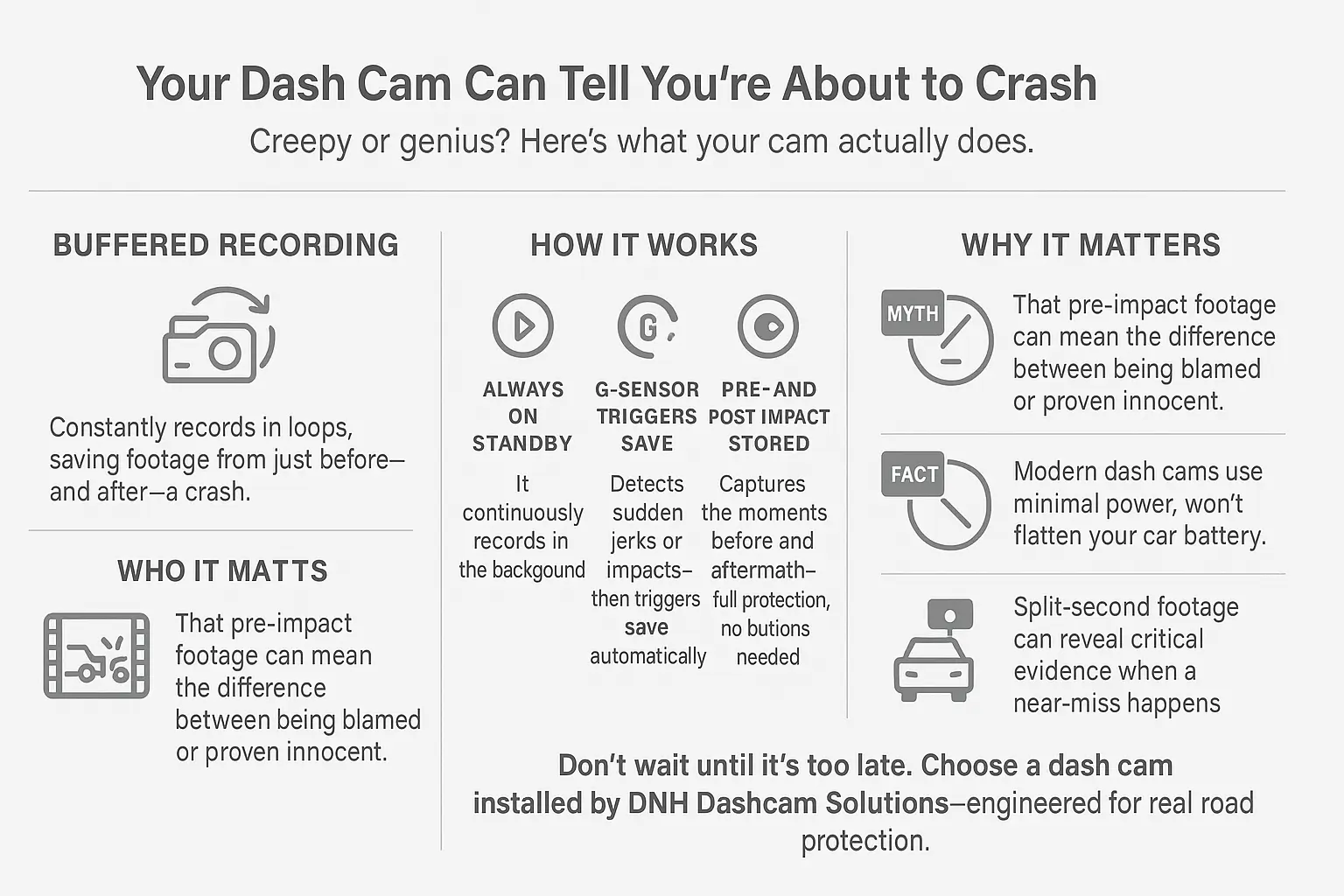
- Always on standby: Your dash cam is constantly on the job, quietly recording in the background even when you’re not thinking about it.
- G-sensor kicks in: If your car suddenly jerks, bumps, or shifts unexpectedly, the camera picks up on it instantly.
- Footage saved automatically: It grabs and saves a clip showing what happened before and after the moment; it doesn’t miss a beat.
- No button-press needed: You don’t need to lift a finger. The dash cam takes care of everything in the background.
That pre-impact recording often captures the key moment that shows who was really at fault. And in many cases, that’s the kind of proof that protects you from being blamed unfairly.
Why You Should Care About Pre-Impact Footage
You’re cruising along at the speed limit, driving safely, when someone suddenly runs a red light. You try to stop, but they still smash into the front of your car.
Now, if your dash cam doesn’t have buffered recording, it might only capture the aftermath; a crumpled bumper and a car speeding off.
But with buffered recording, you get everything, including the moment they ran the light.
That kind of footage isn’t just helpful; it can save you from insurance nightmares, drawn-out arguments, or being unfairly blamed for something that wasn’t your fault.
It’s often the only neutral, factual evidence you have when it’s your word against someone else’s.
Want to learn more about how dash cams help with everyday road safety in Australia?
Check out this guide on how dash cams enhance driving safety on Australian roads for more insights.
How Buffered Recording Actually Works
Constant Looping
Your dash cam is always working in the background, recording short loops over and over again. But it doesn’t save everything, only the parts that matter.
When it senses something unusual, like a sudden jolt or impact, it quickly pulls the latest loop and saves it as a special clip.
Because your dash cam is always recording in a cycle, those few seconds before the impact are already captured and ready to review.
G-Sensor Activation
Your dash cam uses a built-in G-sensor, short for “gravity sensor,” to detect sudden changes in movement; like when your car suddenly brakes, swerves, or gets hit.
Once it picks up that shift in speed, angle, or force, it jumps into action by saving a video clip that shows what happened before and after the incident.
Event Folder Storage
Once an important event is recorded, your dash cam moves that clip into a dedicated folder.
This way, it won’t get lost or accidentally erased as the camera continues its regular looping.
Keeping it in a separate spot helps make sure your critical footage is safe and easy to find later when you need to watch or share it.
Myths About Buffered Recording You Need to Forget
“It Drains Your Battery”
Buffered recording draws very little power, especially when your vehicle is parked.
Most modern dash cams are smart enough to shut themselves off before they ever come close to draining your battery, so you won’t be left with a flat car the next morning.
“It’s Just a Gimmick”
Many drivers realise the value of buffered recording only after it’s too late. If you’ve ever had a near miss, you know how fast things happen.
Buffered recording makes sure those split-second moments are captured and saved. Without it, important details can slip through the cracks before you even know something happened.
“You Only Need it for Accidents”
The road is full of unexpected moments; everything from reckless drivers to falling tree branches or even a kangaroo hopping out in front of you.
Having those extra seconds of footage can turn your dash cam from a basic gadget into a solid backup when things go sideways.
Not All Dash Cams Are Created Equal
For many drivers, this is the feature that catches incidents no one ever sees, but you’ll still have proof when it matters most.
- Some dash cams claim to offer buffered recording, but often it’s just basic, low-resolution video or only saves a second or two before impact.
- A high-quality system gives you much more; like full HD footage, longer pre- and post-impact windows, and sensors that actually respond when they need to.
- This is where professional advice comes in handy. Experts can guide you to a setup that actually works when it matters most, instead of leaving you with gaps in your footage.
Buffered Recording in Parking Mode: Quietly Watching While You’re Away
Accidents don’t just happen while you’re driving.
Your car could get sideswiped in a car park, bumped by a runaway trolley, or even vandalised while sitting outside your home.
Buffered recording in parking mode gives you a safety net even when you’re nowhere near your vehicle:
- 24/7 surveillance: The dash cam remains alert even when the engine’s off, capturing suspicious movement or sudden impacts.
- Triggered response: If someone backs into your parked car or tries to break in, buffered recording jumps into action, capturing the lead-up and aftermath.
- Peace of mind: Whether you’re parked overnight, at the shops, or outside your home, you’ll have video evidence of anything unusual.
Want to understand how dash cam footage helps after an incident?
Here’s a helpful article on How dash cams support insurance claims and disputes that breaks it down with real-world examples.
Why Choose DNH Dashcam Solutions
DNH Dashcam Solutions doesn’t just sell dash cams, we help drivers protect what matters most. Our systems are fully installed, tested, and backed by real support.
We only work with trusted brands and proven models.
We also guide you on the features that actually matter, like buffered recording and parking mode.
With experience serving thousands of drivers across Australia, we understand what local roads demand.
Book Your Dash Cam Setup Today
Don’t wait until it’s too late to realise you needed buffered recording.
Whether you’re in Sydney or anywhere across Australia, we’re here to help you drive smarter and safer.
Call now and book a free consultation before anything goes wrong.