
TL;DR: High temperatures can cause electronics to overheat, malfunction, and lose data. Taking small steps like parking in the shade, using heat-resistant devices, and removing sensitive gear when not in use can prevent costly damage.
Key Takeaways:
- Electronics can degrade quickly when exposed to extreme heat for prolonged periods.
- Heat-resistant components last longer and perform better in challenging climates.
- Preventive measures can significantly reduce the risk of overheating.
- Regularly checking for early warning signs helps avoid permanent equipment failure.
Understanding the Australian Summer
Summer in Australia can feel relentless, especially in regions where the heat doesn’t let up for days.
In many areas, temperatures climb above 35°C and stay there, with heatwaves sending the mercury soaring even higher.
The sun’s strength here is intense, and high UV levels can make your car’s interior heat up in no time.
Mix in the dry winds of inland areas or the heavy humidity along the coast, and you’ve got conditions that can push your dash cam far beyond what it’s designed to handle.

Why Heat Is the Silent Dash Cam Killer
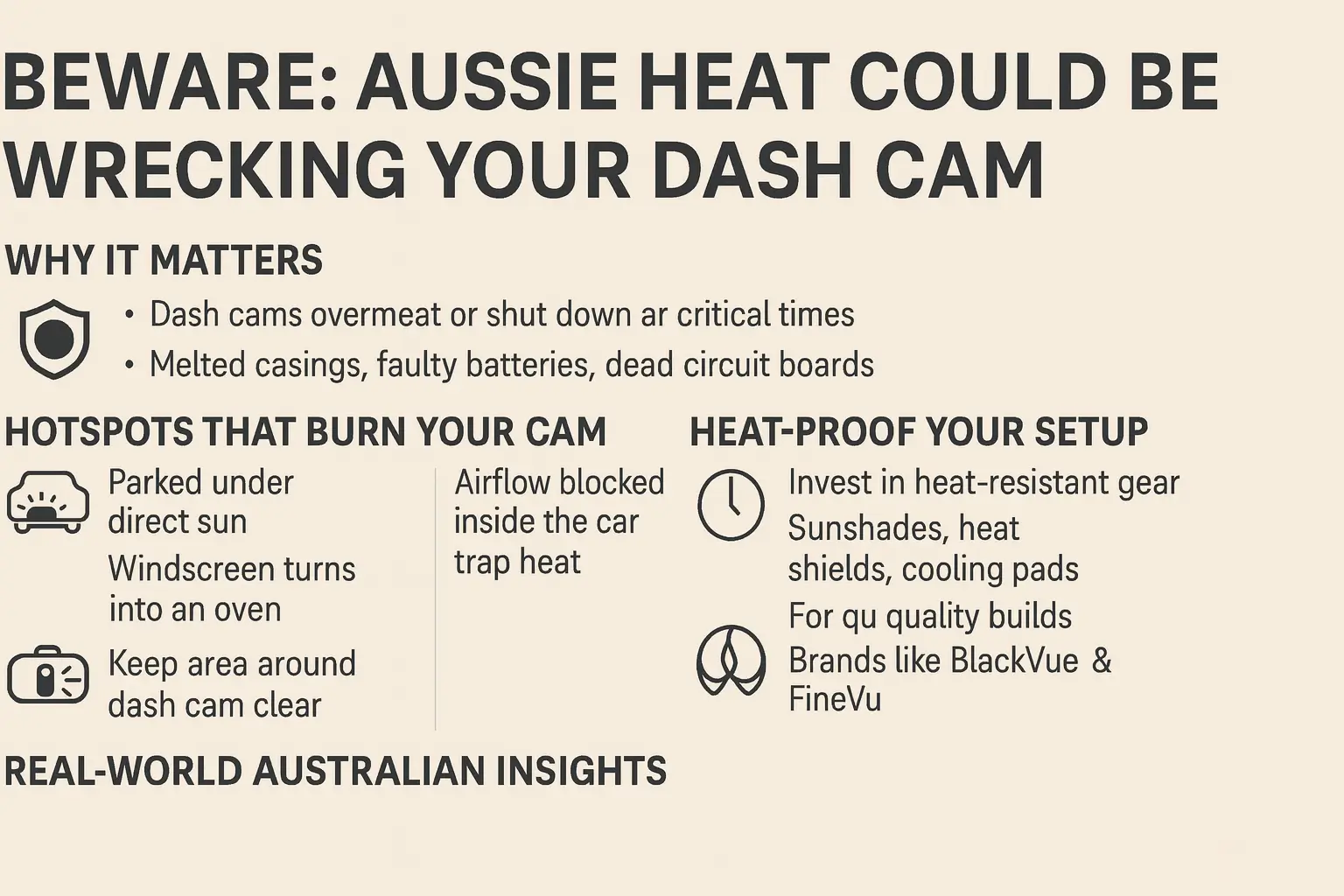
Australian summers can be unforgiving, with temperatures in some areas pushing well past 40°C and turning cars into ovens.
Even though your dash cam is made to handle a range of weather conditions, prolonged exposure to this intense heat can slowly chip away at its lifespan.
Inside a sealed car, heat builds up quickly, and those high cabin temperatures can start wearing down delicate internal parts much sooner than you might expect.
Over time, this kind of strain can cause your camera to glitch, lose clarity in its recordings, or eventually stop working altogether.
The Damage Extreme Heat Can Do to Your Footage and Files
Excessive heat can make image sensors struggle, often producing grainy or distorted footage that’s far from clear.
This loss of quality can make it much harder to read number plates or pick up on small but important details during an incident.
The impact of high temperatures can include:
- Blurry or washed-out images that reduce the clarity of important evidence
- Flickering or colour distortion during playback
- Slow response time when switching between recording modes
- Shortened recording duration as the camera overheats and stops to protect itself
Memory cards are also heat-sensitive. Prolonged exposure can lead to:
- File corruption that renders recordings unplayable
- Sudden data loss when you need footage most
- Reduced lifespan of the card, requiring more frequent replacements
For other issues that can damage your dash cam besides heat, you can check out these surprising habits that ruin your dash cam fast.
Summer Sun and the Risk to Your Dash Cam Mounts
The adhesive that keeps your dash cam in place can start to soften when the temperature inside your car gets extreme.
Once the mount weakens, your camera could shift or even drop while you are driving, creating a distraction or causing damage.
If your dash cam uses a suction mount, the heat can make the seal fail completely.
In that moment, you might find your camera swinging from its power cable or landing with a thud on the dashboard.
Tips to Protect Your Dash Cam in Summer
If you want your dash cam to survive the hottest months, taking preventative steps is crucial. Here are practical ways to extend its life and performance:
Choose Heat-Resistant Models
Look for a dash cam that’s designed to handle scorching conditions, not just mild weather.
Choosing a model with heat-resistant capacitors instead of standard lithium-ion batteries can make a big difference, as these components are far more reliable in the sweltering Australian summer.
If you’re not quite sure which specifications are worth paying attention to when buying a dash cam, you’re not alone.
It’s easy to get caught up in flashy features that don’t really matter, so it’s worth checking out this guide on dash cam myths and important specs for clear, practical advice.
Park Smart
Whenever you can, park in a shaded spot to keep your car from turning into a heat trap.
Pairing that with a reflective windscreen cover can make a noticeable difference, cutting cabin temperatures and easing the strain on your dash cam.
Remove When Not in Use
If you know your car will be sitting in the sun for several hours, it’s worth taking the dash cam out beforehand.
Keeping it in a cooler, shaded place such as inside your home or in a glovebox out of direct sunlight can go a long way toward protecting it from long-term heat damage.
Use High-Endurance Memory Cards
These cards are built to cope with higher temperatures and the nonstop writing of dash cam footage.
By using them, you give your device a better chance of avoiding file corruption or data loss during scorching heatwaves.
Signs Your Dash Cam is Suffering from Heat Damage
Heat damage can creep up slowly, so it pays to know what to look for. Common warning signs include:
- Distorted or faded video colours
- The device randomly restarting while in use
- Buttons or touch controls becoming unresponsive
- A noticeable lag or delay when starting up the device
You might also notice your recordings missing timestamps or certain files refusing to save properly.
These small but frustrating glitches are often an early warning sign that the heat is starting to interfere with how your storage card performs, and if ignored, they can lead to more serious data loss.
Real-Life Cases of Heat Damage in Australia
Drivers across Australia have shared stories of dash cams shutting down in the middle of a trip during a heatwave.
Some found that their devices restarted repeatedly, while others discovered that hours of crucial footage had not been saved.
Fleet operators have reported needing to replace multiple cameras within a single summer because of internal component failure.
These examples highlight the importance of choosing the right dash cam and taking preventive action before the heat hits.
When to Upgrade or Replace
If your dash cam has already suffered from heat damage, it’s a smart move to consider upgrading to a model that can handle hotter conditions with ease.
Newer units are built not just to withstand higher temperatures but also to deliver sharper resolution and more advanced features that make every recording clearer and more reliable.
Working with a trusted supplier means you get the right advice on choosing a dash cam tailored to Australian summers.
That’s why many drivers turn to the experts at DNH Dash Cam Solutions for guidance, quality products, and dependable support.
Why Choose DNH Dash Cam Solutions
At DNH Dash Cam Solutions, we’ve seen first-hand how the fierce Australian heat can take a toll on sensitive electronics.
That’s why we stock dash cams that are purpose-built to handle the harsh summer climate, giving you peace of mind that your device will work when it matters most.
Our service goes well beyond selling a product.
We offer expert installation to make sure your dash cam is positioned for the best performance, provide friendly advice on choosing the right model for your needs, and deliver ongoing support long after your purchase.
Stay Protected Before the Heat Strikes
Don’t wait until the summer heat has already taken its toll on your dash cam and your recordings.
Acting early gives you the best chance of keeping your camera in top shape, avoiding the stress of failed equipment, and ensuring you always have the footage you might need.
Book your dash cam consultation today and ensure your device is ready for the harsh Australian summer.