
TL;DR
Dash cam installation in Melbourne typically costs $150 to $400 for common hardwired setups, with more complex systems costing extra. The best value comes from choosing an installation that meets your needs without paying for unnecessary features.
Key Takeaways
Dash cam installation quotes in Melbourne can range from under $200 to over $350 for seemingly similar work. So why do dash cam installation quotes vary so much, even when the cameras and services seem identical?
Prices vary depending on installation requirements, camera setup, and vehicle complexity. Understanding dash cam installation cost Melbourne drivers can expect helps you compare quotes and avoid unnecessary expenses.
In Melbourne, hardwired dash cam installation typically costs $150 to $250 for front-only and $200 to $400 for front-and-rear setups. Three-channel systems and parking-mode extras can cost more, as shown in the indicative 2026 price breakdown below.
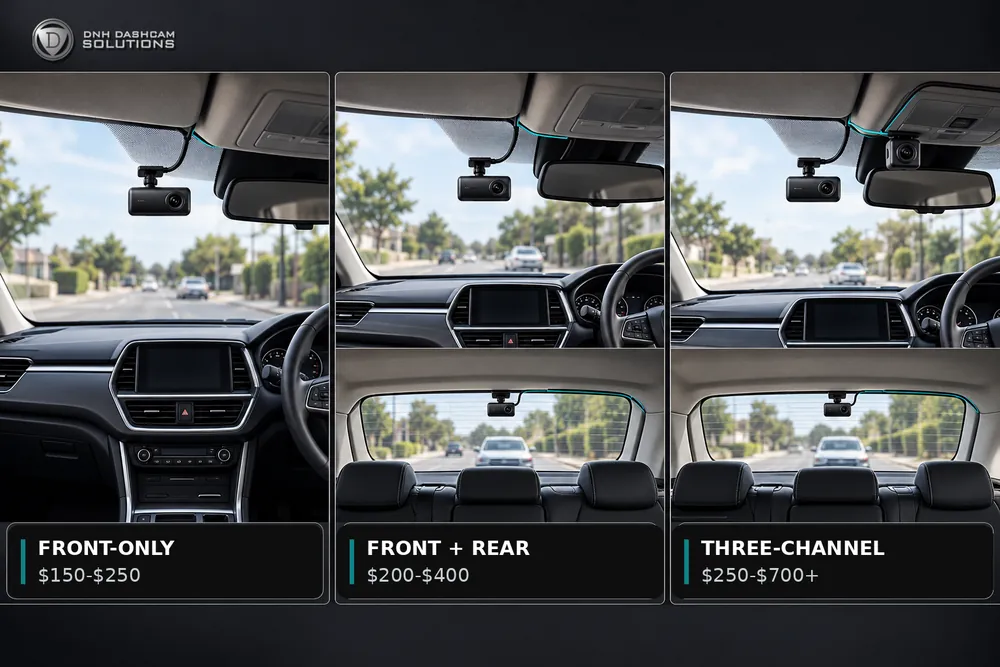
These are indicative labour costs, not fixed quotes, and may exclude cameras, accessories, or additional charges. Request a written quote based on your vehicle and camera setup to compare prices accurately.
Before comparing installers, establish whether you’re paying solely for fitting or purchasing the camera as part of the package. Mixing these two prices can make an otherwise reasonable quote appear expensive.
If you’ve already purchased your camera, an installation-only service may be the more economical option. You’re paying for labour, mounting, cable routing, power connections, and any setup included in the quoted service.
However, check whether your camera comes with the correct hardwire kit, mounting accessories, and memory card. Missing components may need to be purchased separately, and not every camera is compatible with every vehicle or preferred installation method.
A complete package includes the dash of cam equipment and professional fitting, with other accessories depending on the offer. Although the upfront figure is higher, it may be easier to compare when the camera, required cables and installation are included in one price.
For example, a $700 package cannot be compared directly with a $250 labour-only quote. You would first need to account for the camera model, recording specifications, storage, accessories and services covered by each offer.
The price difference isn’t necessarily about one installer being more expensive than another. Two vehicles fitted with the same camera can require different amounts of work.
A front-only dash cam generally requires less installation time because the camera and power cable are located near the windscreen. Adding a rear camera means routing another cable through a suitable interior trim and mounting the second unit correctly.
Three-channel systems introduce an additional camera, usually facing the cabin. They require further positioning and configuration, particularly when both road and passenger footage are important.
Installing a dash cam in a small sedan can differ from fitting one in an SUV, ute or van. Rear tailgates, trim panels, existing electronics and suitable power connections can all affect the work involved.
Modern vehicles may also require additional care around sensitive electrical systems and interior components. This is why an installer should ask about your exact vehicle before confirming the final price.
Connecting a camera to a suitable vehicle power source is more involved than simply plugging it into a 12-volt accessory socket. Hardwiring requires a compatible kit, appropriate electrical connections, and proper cable management.
For cameras that support parking mode, configuration may also include low-voltage cut-off settings. These features contribute to the installation cost but can be valuable when you regularly leave your vehicle parked outside.
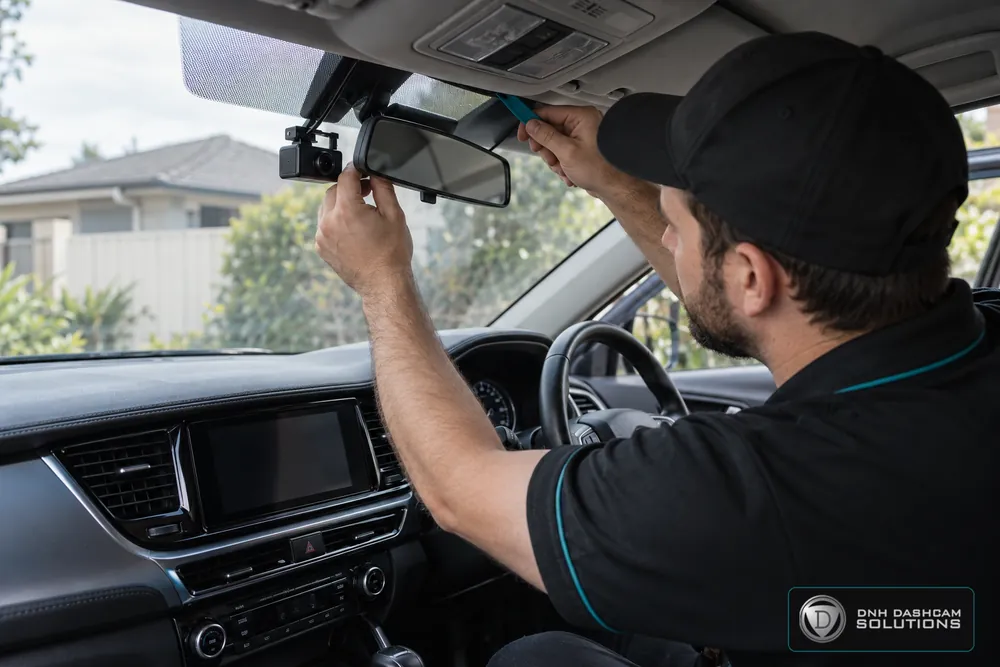
Mobile dash cam installation allows the technician to complete the work at your home, workplace or another suitable location. It saves you the hassle of visiting a workshop and arranging alternative transport while your camera is installed.
Some providers include travel within designated service areas, while others charge additional fees for distant suburbs. Always confirm whether the mobile visit is included in your quoted total.
A good quote should explain more than the number of cameras being fitted. It should describe the work, materials, and checks included, so you know what to expect when the installation is finished.
The camera needs an unobstructed view without interfering with the driver’s visibility or vehicle safety systems. According to Transport Victoria’s guidance, dash cams should be securely mounted, with placement behind the rear-view mirror recommended where suitable.
Camera positioning should also account for the wiper sweep, windscreen sensors, and recording angle. A camera that powers correctly is of limited value if important road activity falls outside its view.
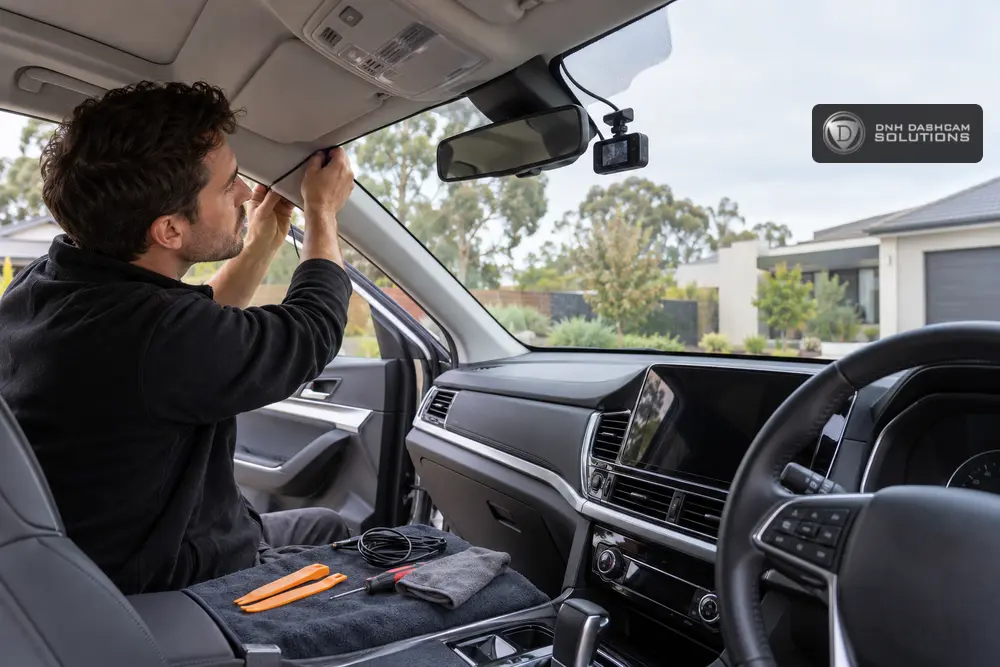
Professional fitting should include appropriate routing and securing of camera cables, keeping them away from controls and safety equipment. Care is required near A-pillars and curtain airbag deployment areas.
A neat finish isn’t purely cosmetic. Proper cable routing reduces the likelihood of loose wires interfering with passengers, vehicle controls, or interior components.
Once the cameras are connected, the installer should check whether the system records as intended. This may include confirming front and rear footage, memory card operation, relevant app settings and parking mode behaviour where applicable.
Before accepting a quote, ask whether these checks are included and whether the installer will explain how to retrieve your recordings.
Parking mode can capture incidents while your car is unattended, making it useful for street and public parking. It requires a suitable power source, such as a protected hardwire kit or dedicated battery pack.
A battery pack costs more but can provide longer coverage while reducing reliance on your car’s starter battery. If you mainly record while driving, a basic front-and-rear setup may offer better value.
A cheaper quote isn’t always a bargain, and a higher price doesn’t guarantee better workmanship. What matters is whether both quotes include the same services and installation requirements.
For example, a $240 quote could exceed a $320 quote once hardwiring; parking-mode setup and testing are added. Compare the final costs and inclusions to avoid unexpected expenses or corrective work.
Comparing installation quotes becomes easier when every provider answers the same questions. Before committing, check the following:
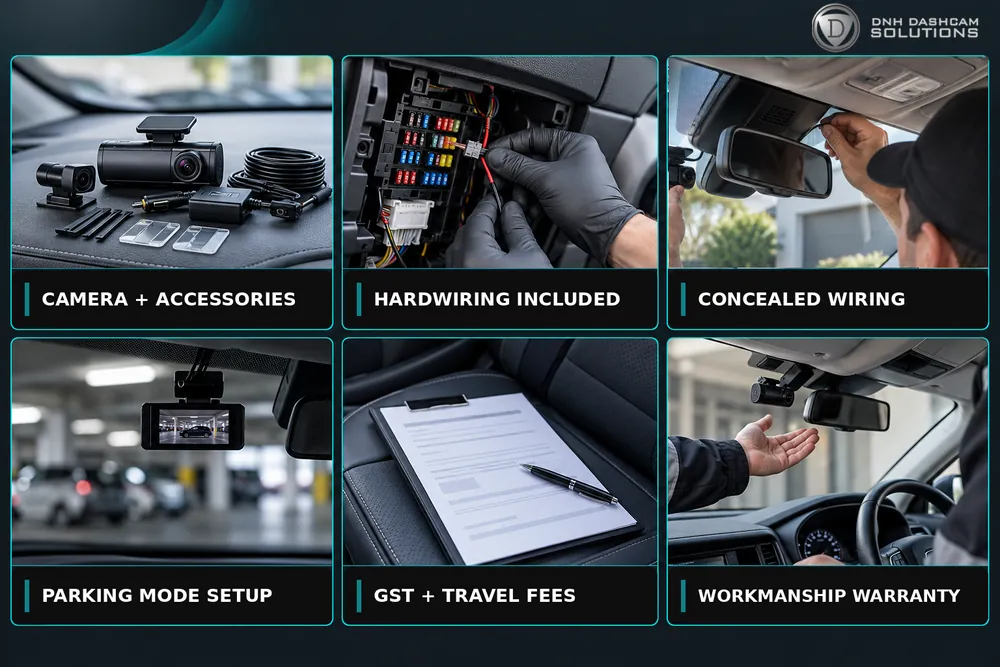
Installing a front-facing dash cam through a suitable accessory socket can be a straightforward DIY job. You’ll avoid labour costs, but safe mounting and tidy cable routing still matter.
Hardwiring is more involved, especially when routing cables near airbags or connecting to vehicle electrics. For multi-camera systems or parking mode, professional fitting can save time and reduce installation mistakes.
We bring professional mobile dash cam installation to Melbourne drivers, covering front-only, front-and-rear, and three-channel systems. Our services also include compatible hardwiring, external battery packs, and installation of customer-supplied cameras.
Whether you already own a compatible dash cam or prefer a supply-and-install package, we can offer options suited to your vehicle. Our team checks compatibility conceals wiring and tests recording before handover, with workmanship support and practical advice.
The best dash cam installation isn’t necessarily the cheapest or most expensive option. It’s the one that provides the coverage, features, and workmanship your vehicle actually needs, without unexpected extras.