
TL;DR: The best 4WD dash cam setup prioritises heat tolerance, secure mounting, reliable storage and dependable power over rugged looks alone.
Key Takeaways
Shopping for the best dash cam for 4 WD off-road driving in Australia can quickly turn into a hunt for the toughest-looking camera on the shelf. Rugged styling, 4K labels and long feature lists sound impressive, but they do not guarantee reliable off-road performance.
Off-road driving brings rough tracks, extreme heat, dust and long recording hours that can push a dash cam harder. The best setup is one that stays reliable in the conditions your 4WD actually faces.
You do not need a camera labelled “off-road” to get reliable performance from your 4WD. A quality dash cam can handle gravel roads and rough tracks when its mounting, storage, power setup and specifications suit the conditions.
Off-road driving simply places more stress on the system. Corrugations can loosen mounts or shift cables, while high cabin temperatures can affect performance, so secure installation and suitable operating limits matter.
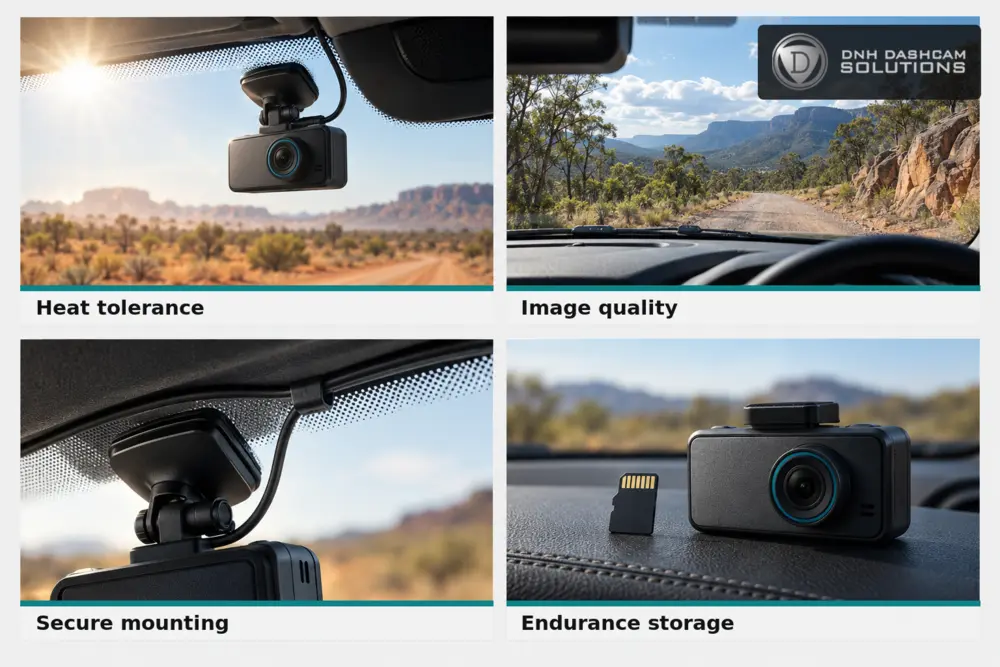
Most dash cams sit inside the cabin, so heat tolerance usually matters more than water or dust resistance. Check the manufacturer’s operating temperature, especially for vehicles regularly parked in direct Australian sun.
Many modern dash cams use a supercapacitor instead of a rechargeable battery to better suit warm vehicle environments. Still, compare the full specifications, including operating limits, recording modes and manufacturer guidance.
Resolution matters, but sensor quality, HDR, frame rate and low-light performance also determine how useful the footage will be. A 4K badge alone cannot guarantee clear recordings in every driving condition.
Glare, darkness, changing light and a dirty windscreen can all reduce the clarity of your dash cam footage. Choose a camera that performs reliably across the environments your 4WD regularly encounters.
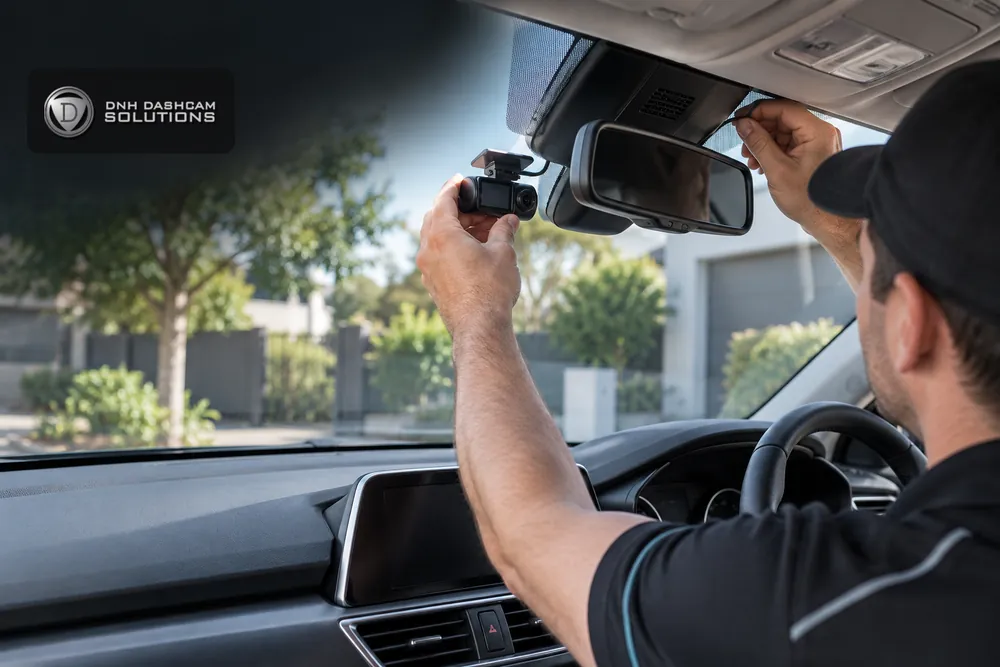
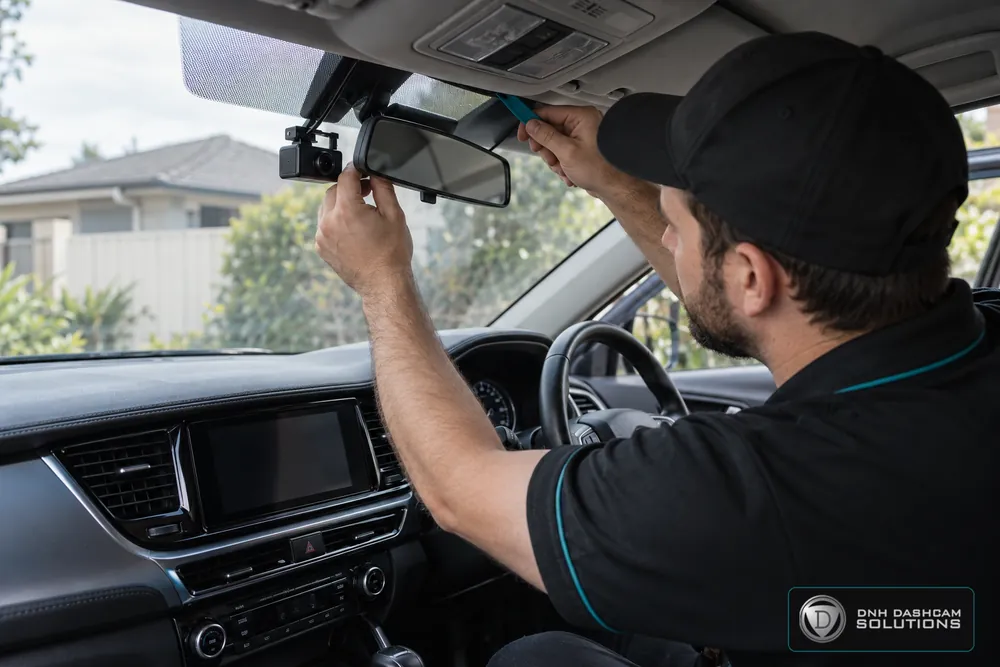
A good camera still needs a firm, well-positioned mount with a clear view through the windscreen. Front and rear units should stay secure without blocking vision, sensors or other vehicle equipment.
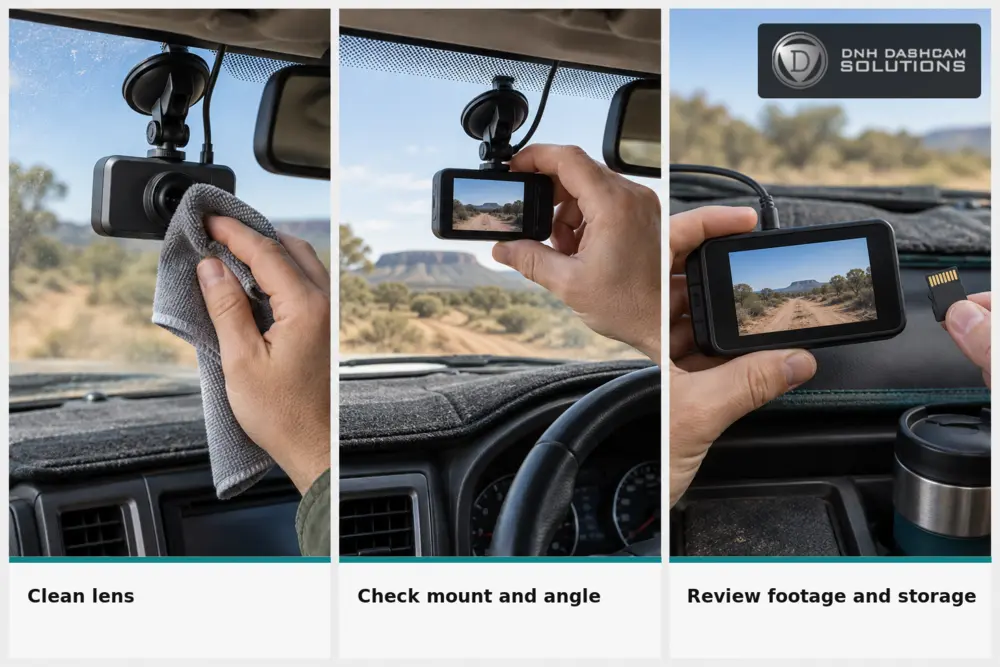
After rough or corrugated driving, check that the cameras have not shifted from their intended angles. Repeated vibration can expose loose mounting that may never appear during normal road use.
Long touring days create hours of footage, especially with rear or third cameras recording at the same time. Loop recording manages storage automatically, but sufficient card capacity and high endurance remain essential for long off-road journeys.
Use a high-endurance card that matches the dash cam manufacturer’s supported specifications and storage limits. Save important clips to another device before loop recording overwrites older footage you may still want to keep.
The G-sensor detects sudden movement or impact and protects important footage by preventing those recordings from being automatically overwritten later. On rough tracks, however, corrugations and potholes may trigger unnecessary event files.
Sensitivity varies between dash cam models, so test the settings and follow the manufacturer’s guidance. Check your recordings after rough trips to make sure the sensor is not reacting to every bump.
Dash cams usually rely on vehicle power while driving rather than a small internal battery. Hardwiring can also support parking mode on compatible systems while keeping the installation neat.
For longer parked coverage, an external battery pack can power the camera without relying heavily on the starter battery. This can be useful when a 4WD spends extended periods parked at campsites, trailheads or accommodation.
A front-only dash cam keeps recording simple while reducing storage demands for everyday and off-road driving use alike. It only records the road ahead, so rear incidents and activity remain outside the camera’s field of view.
A front and rear setup records both directions, giving touring 4WDs broader coverage on highways, tracks, and drives. Rear footage adds useful context during tailgating, rear impacts, or incidents before and after reaching off-road destinations safely.
A third camera can record the cabin, helping work vehicles, rideshare drivers, or owners needing coverage. Recreational 4WD owners should add a third camera only when the extra view serves a purpose.
Weekend drivers may prefer simple front coverage and secure mounting, while long-distance tourers often need better storage, night recording and wider coverage. Your dash cam should match how far, how often and where you drive.
Daily commuters may benefit from parking mode, while work utes can need broader protection around unfamiliar locations. The best setup is the one that fits your 4WD’s real use.
Appearance tells you very little about image quality, heat tolerance, storage reliability or power management. Read specifications rather than judging the housing.
Higher resolution can provide additional detail, but glare, darkness, movement, a dirty windscreen and poor positioning can still produce disappointing footage.
Most automotive dash cams rely on vehicle power while driving. Parking recording usually depends on an appropriate hardwire or other compatible power solution.
Higher sensitivity may create unnecessary event files when a 4WD travels across rough surfaces. The right setting should protect useful footage without reacting to every bump.
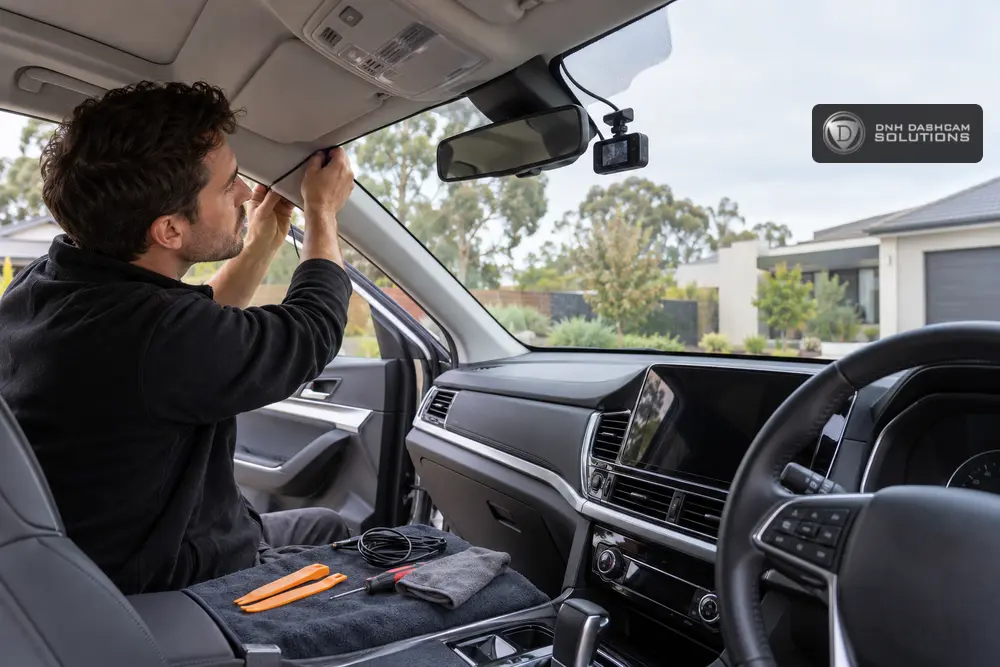
Rough roads quickly expose weak installation, so wiring, mounts and camera angles must stay secure through constant vibration. Rear camera cables should be routed carefully to prevent rubbing, rattling, disconnection, or movement around vehicle trim panels.
Hardwired systems need compatible hardware, correct connections and properly configured parking settings. Before finishing, record footage, check camera views, confirm date and time, and make sure recordings remain accessible afterward.
A quick check after rough or dusty driving helps keep your dash cam ready for the next trip. Focus on the parts most likely to shift, become dirty or develop recording problems.
DNH Dashcam Solutions installs front-only, front-and-rear and 3-channel dash cams, hardwire kits and external battery packs across Melbourne. The team works with brands including BlackVue, Viofo, FineVu, Thinkware and Garmin, plus compatible customer-supplied systems.
Each installation includes careful camera placement, discreet wiring, supported parking-mode setup and testing. The recommended setup is based on your 4WD, driving habits, coverage needs and planned trips rather than price alone.
A reliable dash cam setup should suit your 4WD, driving habits and the conditions you regularly face. DNH can install, hardwire, configure and test your system across Melbourne, whether you already own a compatible dash cam or need help choosing one.