
TL;DR: The best dash cam setup depends on how often the vehicle is driven, where it is parked, and the type of coverage that would be most useful after an incident. For many family cars and commuters, front and rear recording offers a practical balance, while simpler or three-channel systems make more sense for specific driving needs.
Key Takeaways:
Choosing a dash cam can be complicated, with front, rear and three-channel options, parking mode, cloud features, batteries and different resolutions. For family cars, the best choice depends on driving habits, parking locations, and who drives regularly.
A family SUV, new-driver car, commuter vehicle, and securely parked vehicle each require different dash cam coverage based on usage and risks. A vehicle’s usage and parking habits help determine practical dash cam coverage without paying for unnecessary features or cameras.
Dash cam advertising naturally focuses on specifications such as resolution, frame rates, viewing angles, night performance, and smart features. While these details matter, the first question should be: what do you actually need the camera to capture?
Consider weekly vehicle use, including Melbourne commuting, public parking, multiple drivers, new drivers, or overnight street parking. These practical details often provide a better guide to the right setup than comparing specification sheets.
Before deciding between one, two or three cameras, ask:
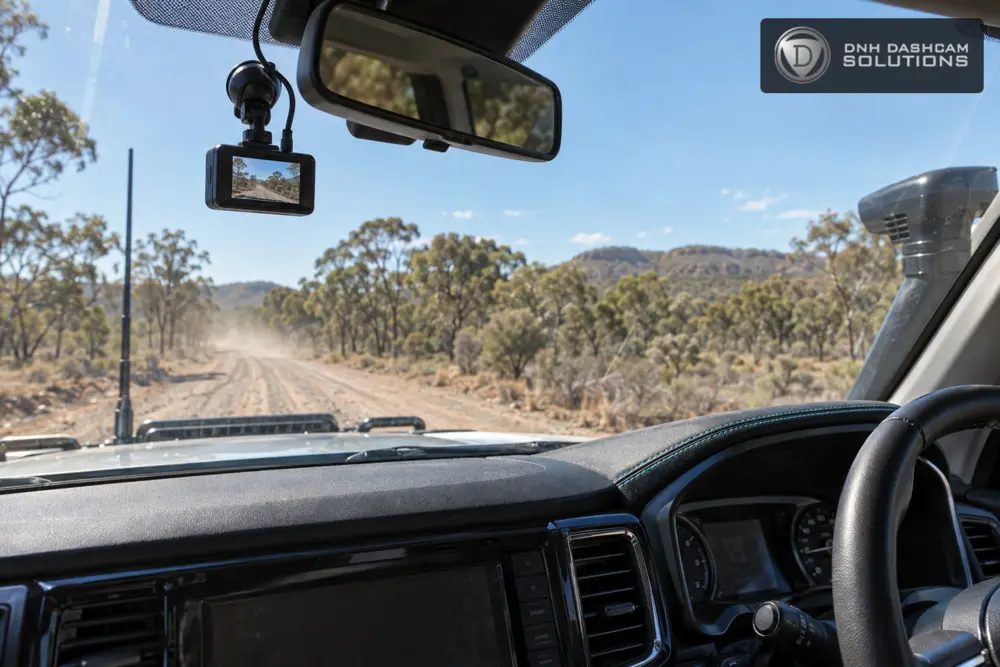
Choose a front camera for road evidence, or front-and-rear coverage with parking mode for crowded parking areas. There is no universal setup that suits every vehicle.
Family vehicles handle school runs, shopping, appointments, holidays, and errands, so front-only recording can feel limiting. Rear footage also helps document rear-end collisions or parking damage.
For many families, a two-channel system balances front and rear coverage without adding unnecessary interior-camera complexity. For vehicles regularly parked in busy public areas, front and rear coverage can help capture bumps and reversing incidents.
Not every family need two cameras, however, as a vehicle used occasionally and stored securely may only require a quality front camera. The best approach is to match coverage to the vehicle’s actual use rather than assuming more cameras are always better.
Buying a dash cam for a new driver can be tempting, but the best choice is usually a simple, reliable system that starts recording automatically, saves clear footage and requires minimal interaction, allowing the driver to focus on the road and access recordings only when needed.
A one-channel front camera is a practical starting point for many new drivers, recording traffic lights, vehicles ahead, road positioning and other details surrounding an incident. It is also simpler to install and generally requires less storage than a multi-camera system.
Front and rear coverage may be worthwhile for frequent driving, congested areas, or regular public parking. Front and rear coverage depends on driving habits, as daily commuting may warrant two-channel protection for more than occasional driving.
Daily driving creates regular exposure to traffic, sudden braking, lane changes and merging vehicles. A dash cam should therefore start recording automatically and work reliably without constant adjustment.
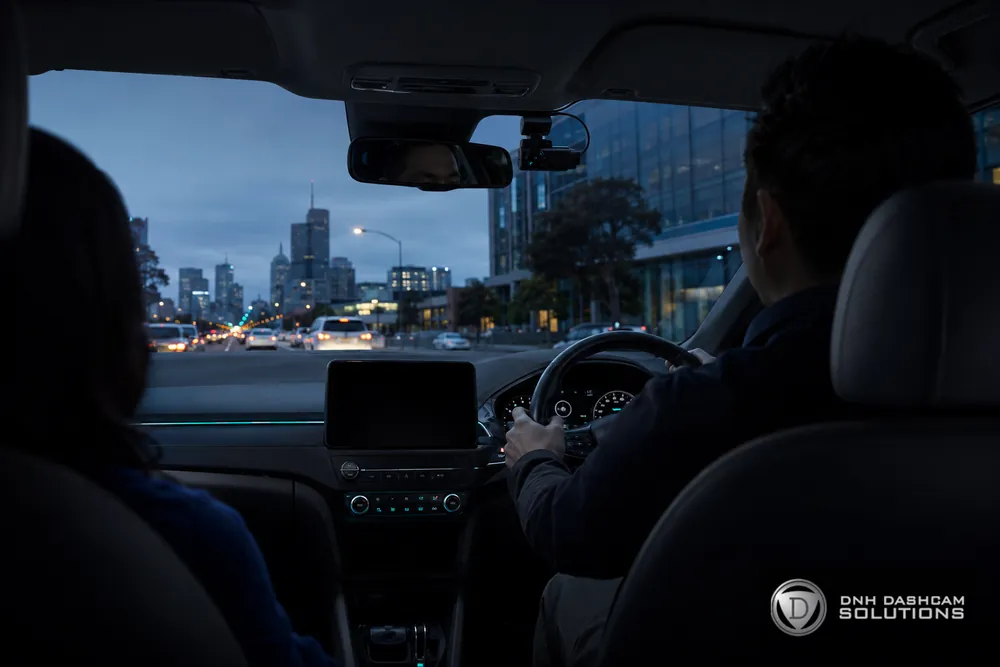
Front and rear coverage can help capture incidents in busy traffic, including rear-end collisions, sudden braking, and close encounters. For Melbourne commuters, a two-channel system is useful in heavy, stop-start traffic.
Reliability is essential for commuters who drive thousands of kilometres each year, often through unpredictable traffic, changing weather, and busy urban conditions. The dash cam should record automatically without requiring daily setup or complicated settings.
Three-channel systems may seem like the obvious premium choice, but more cameras are not always better. Three-channel systems record the front, rear and interior, making them useful for rideshare, taxi, commercial and selected fleet applications.
For a typical family car, however, interior recording may add little value while increasing storage needs. Consider whether the cabin camera is necessary; otherwise, a two-channel system may offer better value.
Many drivers focus on what happens while they are behind the wheel, but vehicles spend much of their time unattended. Many drivers focus on driving footage, but parking mode helps compatible dash cams monitor unattended vehicles for impacts or movement.
This feature is useful for vehicles regularly parked in shopping centres, workplaces, apartments, train stations, or on the street. For some drivers, it may offer more protection than adding a third camera.
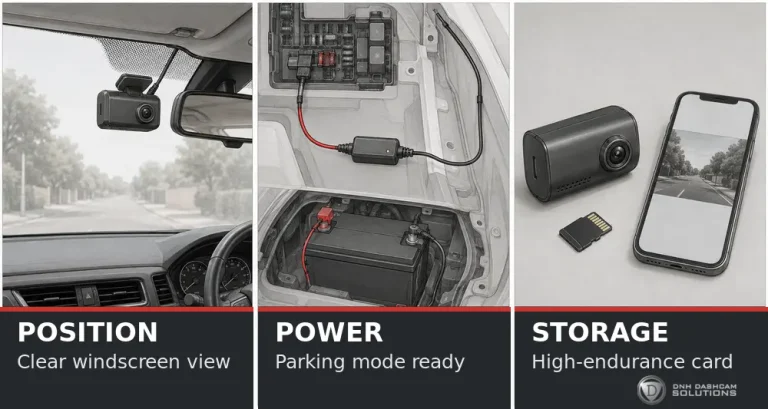
Parking recording needs power after ignition stops, requiring a compatible hardwire kit or external battery pack. Parking recording requires power after ignition stops, so use a compatible hardwire kit with voltage protection or external battery pack.
A poorly planned installation can cause frustration or prevent parking mode from working as expected. Decide how important parking coverage is before installation and confirm the camera, vehicle and power solution are compatible.
Dash cams continuously record and overwrite video, so a high-endurance memory card is a better choice than an ordinary spare card. Storage capacity also matters, as higher-resolution and multi-channel systems use more space than single-camera setups.
Drivers should check recordings periodically, because a powered dash cam is useless if its memory card has failed or stopped saving footage. Drivers should check recordings, format cards as recommended, and replace worn cards to keep the system dependable.
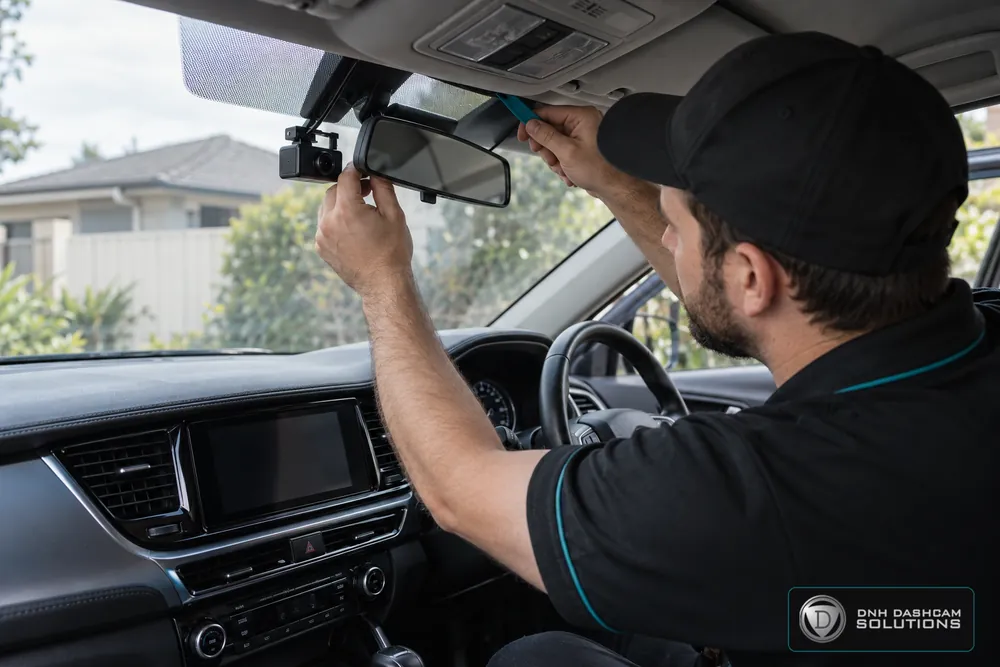
Camera positioning affects the quality and usefulness of your footage, so installation should include:
A properly installed dash cam is more than choosing the right camera; it also requires careful positioning, secure wiring and testing.
There is no need to make the decision more complicated than it is.
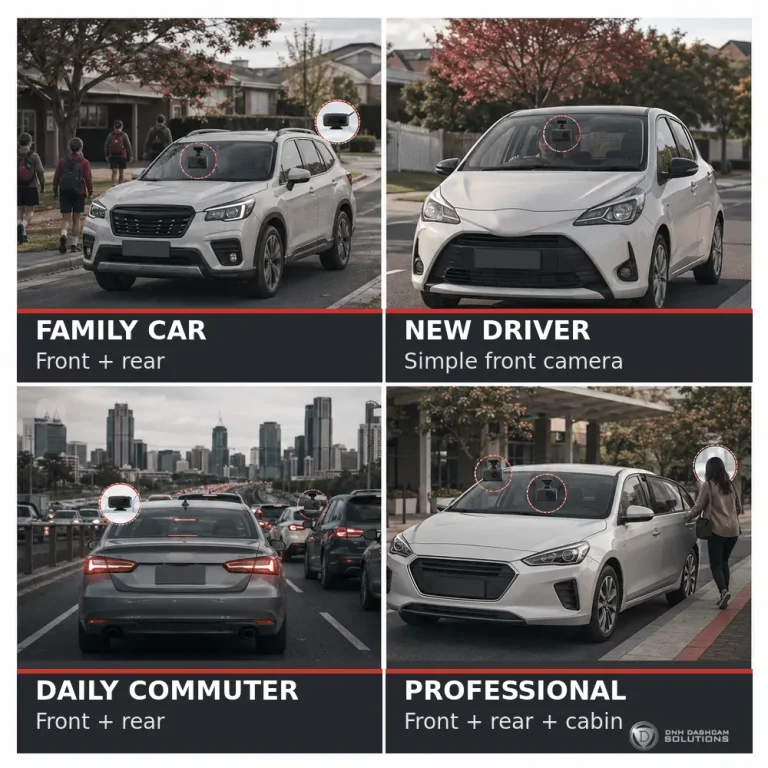
For many family vehicles, a two-channel front and rear dash cam provides a strong everyday setup. Parking mode may be worth adding when the vehicle is regularly left in public areas or on the street.
A reliable front camera or straightforward two-channel system is usually a sensible place to start. Prioritise automatic recording, clear footage, and simple operation rather than an overwhelming list of features.
A front and rear system suits many commuters because it covers both major directions while remaining relatively simple to live with. Drivers who park at workplaces or stations for long periods may also want to consider parking-mode capability.
A three-channel front, rear and cabin setup suits vehicles carrying passengers regularly or requiring interior footage for professional purposes. The important part is choosing a configuration that solves a genuine need, rather than simply adding more cameras.
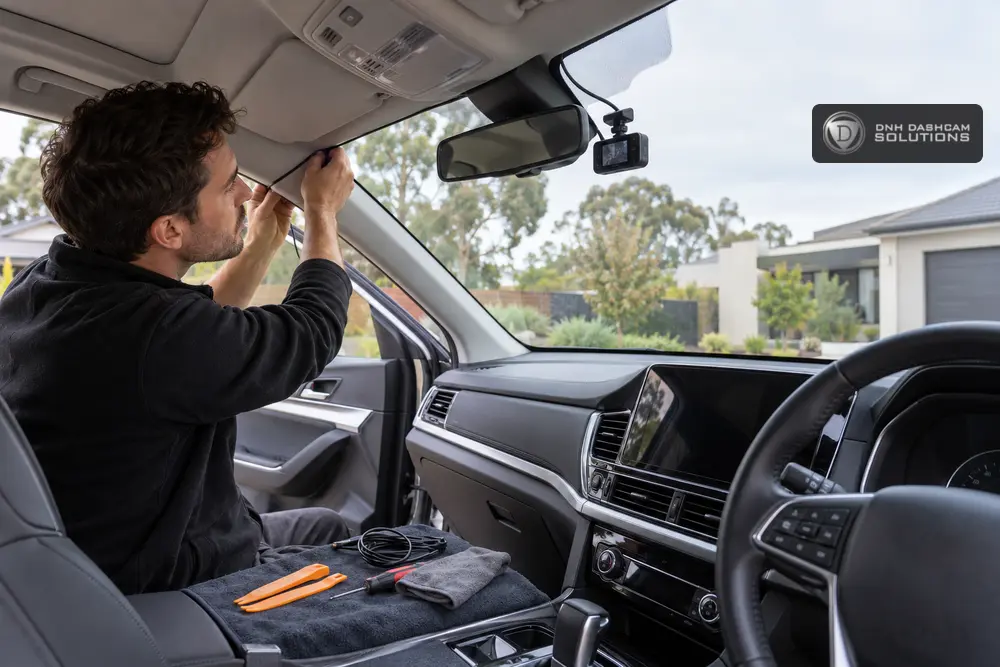
Even excellent cameras are disappointed when poorly positioned, incorrectly wired, or mismatched to the vehicle’s everyday use. We provide Melbourne mobile dash cam installation for 1-, 2- and 3-channel systems, including compatible camera fitting and supply-and-install options.
The service includes hardwiring, parking-mode setup, battery installation, careful camera positioning, tidy wiring, and complete system testing. Mobile installation at home or work makes professional dash cam fitting convenient for families and busy commuters.
The best dash cam is not always the most expensive, so choose a system that suits your vehicle, driving habits and parking needs. For families and commuters, front and rear recording balances coverage, while new and professional drivers may need simpler or cabin-focused systems.